Blue Hour

Image


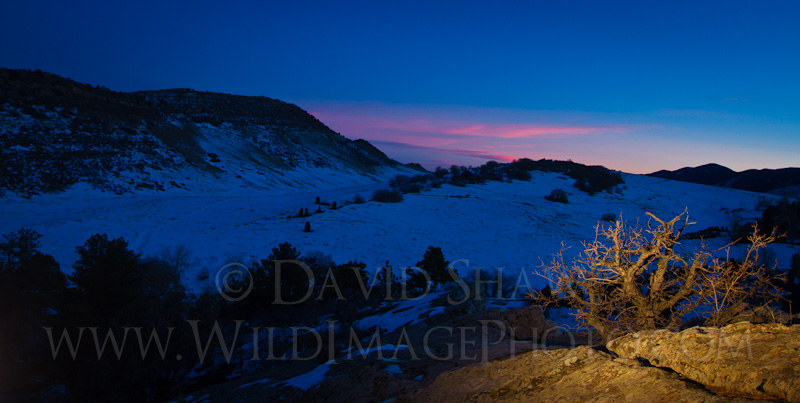
The Blue Hour is the all too short period of time between when the sun disappears behind the horizon and the arrival of night. The evening sky takes on its richest color during this time, and the tones are in constant flux as they deepen toward black. While I’ve shot during this time of day many times before, those efforts have almost always come just after I’ve been photographing the sunset, or evening light. Blue Hour images have always been incidental, rather than purposeful.

On clear blue days here in Colorado, the high altitude sky acquires a rich, deep color, that very quickly sheds the remnant colors of sunset. I’ve been admiring those colors and last night finally got out for a short walk with the camera to make a few images. The main problem I found is adding interest to the foreground. The sky is by far the brightest thing out there, and the foreground elements will quickly move toward silhouette, which is fine if that is what you are aiming for. I wasn’t, so I used an off-camera flash, gelled with a full cut of CTO to highlight some foreground elements in many of the images. I set the camera to a timer and aimed the flash by hand. I also made one black and white conversion (two images down), as an experiment.

On this New Year’s Eve, I wish you all a creative, safe and adventure-filled 2012. Happy New Year!

All of these images and others from the shoot are available as prints and digital downloads on my stock site right here.


My Favorite 6 Images of 2011: Part 2

Image

This post is the second and final part of my contribution to 2011 retrospective pieces. (See Part 1 here.) As I sorted through my images from the year, I realized that I was surprisingly unproductive. All three of these next images were made on the same trip, suggesting I didn’t get out nearly enough. So here is my New Year’s Resolution: Photograph more, lots more. Cheers!

During early August I led a spectacular trip down the Noatak River in the Brooks Range of northern Alaska. The Noatak is a west-flowing river, dropping out of the western portion of Gates of the Arctic National Park, through the wild and remote Noatak National Preserve and then finally out into the north Pacific near the village of Kotzebue. We floated the upper portion, from the point where there was just enough water to paddle the canoes to right around the border between the park and the national preserve. I was co-leading the trip with my friend Garrett, another Arctic Wild guide. This was one of those trips where everything just went right. The clients were the most enthusiastic, best-humored people I’ve ever had the pleasure of taking out into Alaska’s wilderness, the weather was perfect, and I mean perfect. We felt hardly a drop of rain in ten days on the river. It was as though there were a bubble around us that just didn’t allow us to get wet. Storms would roll up the valley, and I’d feel that for sure, this time, we’d get drenched, but the squalls would pass us by, or peter out before they reached us. More than once, we took hikes up on the nearby ridges just to look down and watch our tents being soaked by a passing shower, but by the time we made it back to camp it was sunny, with only the water droplets on the flies of tents to betray the rain. It was eery, and remarkable.

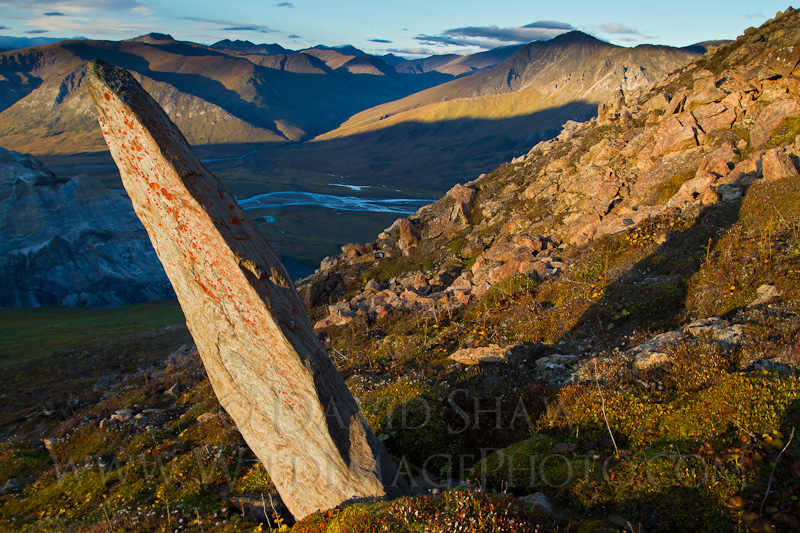
Stone Monolith above Noatak River, Brooks Range, Alaska (Top Image)

The top image I made our first night on the river. We’d been flown into a tiny gravel bar, barely long enough to accomodate the DeHaviland Beaver that carried us from Coldfoot. We paddled a short distance and set up camp on a lovely riverside bar where a tiny, clear stream, trickled down from the drainage above. After dinner we walked up the slope and onto the steeper terrain of a nearby mountain. We climbed steadily. Near a saddle, within moments of the sun disappearing behind the mountains, we found these strange pieces of granite that had been forced out of the tundra by the freezing and thawing of the earth. This particular rock was fifteen feet high and nearly vertical. Other smaller stones were scattered around this patch of tundra like stone chess-pieces, but none quite so grand as this. I had just moments to compose a few images before the sun slipped behind the ridge. While I like this image a lot, I wish I’d had a few more minutes to work. I’d have gotten lower, found some more foreground elements, stepped back and gone wider… Ahh well, it’s the memory of that glorious evening that makes this image one of my favorites of the year. (Canon 7D, 17-40 f4L, handheld).

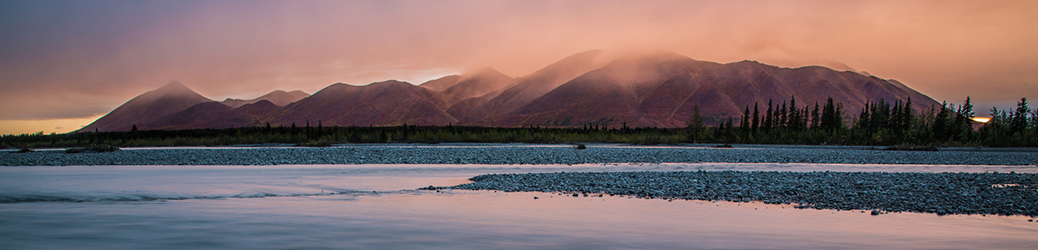
Coming Storm, Kugrak River valley, Gates of the Arctic National Park, Alaska

I made this image on a long day hike up the Kugrak River (a tributary to the Noatak) from our camp along the main stem. We stayed three nights at the mouth of the Kugrak. It was a beautiful spot where chum salmon ran up the crystal clear water of the Kugrak and bears appeared, almost constantly on the river’s edge to fish. On this hike we walked up (and across) the Kugrak a few miles to a tundra bench which we followed for another mile or so before dropping back to the gravel of the valley bottom and heading back to camp. The sun came and went during the hike, and squalls of rain rolled up the Noatak, but never touched us. I made this image of three of our group, topping a small rise as an isolated downpour soaked the mountains on the far side of the valley. I like the repetition of curves in this image. There is the small hillock on the right foreground, then an almost identical curve to the dark mountain the background, and then the curve of the rain squall above. (Canon 7D, 17-40 f4L, handheld)

Camp and Kugrak River Valley, Gates of the Arctic National Park, Alaska

On yet another remarkable evening, I made this image of our camp. The Kugrak river valley reaches up into the mountains in the background south of camp while the broad valley of the Noakak stretches out around our tents. I have other similar images where I moved closer to the tents, but I like this one better because it shows, at least in part, how small our little camp was in this vast space. The arctic has spectacular light, which lingers on the mountains for what seems to be hours. As I look at this image, I’m already looking forward to summer, and the glorious Brooks Range evening sun. Can’t wait to get back.. (Canon 7D, 17-40 f4L IS, handheld).

Today and tomorrow are all that are left of 2011. Still time to create a new favorite image. I’ll let you know if I do.

My favorite 6 Images of 2011- Part 1

Image

Jumping on the end of year retrospective bandwagon, here are my personal 6 favorite images from 2011, and the stories that go with them. These are my favorites for a number of reasons, but it is the memories that go with them that make them special. In no particular order here are the first three:

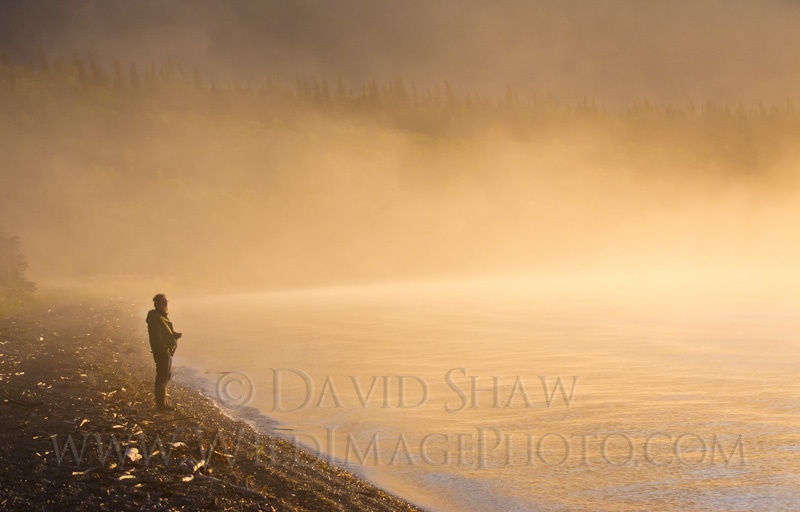
Sunrise, Grosvenor Lake, Katmai National Park, Alaska (Top Image)

I made this image the first morning of a nine day paddle around the Savonoski Loop in Katmai National Park as I was guiding a trip for Arctic Wild. The trip had started out less than perfectly, as Penn Air, had failed to bring our bags from Anchorage to King Salmon in three consecutive flights. Finally, after a long battle with their customer service people, I was assured that our bags would arrive on the final flight of the day. Surprisingly the bags actually arrived and Katmai Air was gracious enough to squeeze in one more flight to take us out to upper Grosvenor Lake just as night was settling across the park. We scrambled to set up camp in the growing darkness, ate a light dinner and flopped gratefully into our sleeping bags. After too few hours of sleep I woke the next morning and peered out of my tent door to see the lake covered in rising steam, the early morning sun lighting up the water in an orange glow and the glaciers of the distant volcanoes lit up with alpenglow. I rose and grabbed my Canon S95 point and shoot and made a few quick landscapes when I looked up the beach and noticed one of my clients enjoying the view over the lake. Within hours the clear blue skies were gone and the drizzle that would follow us for almost the entire 9 day trip had moved in.

Dwarf Fireweed, Great Kobuk Sand Dunes, Alaska

The Kobuk Sand Dunes are an otherworldly place. A few square miles of the sahara dumped into the middle of the boreal forest north of the Arctic Circle. It is harsh looking landscape, with dunes and desert-like vegetation. The comparatively lush forest surrounding the dunes, makes the contrasts even stranger. I spent a couple of days at the dunes this past July, leading another trip for Arctic Wild. It was a basecamp trip, two night in the dunes, and two nights in Gates of the Arctic National Park. My clients, two couples, were on missions to visit every national park in the country, and for one pair, Kobuk National Park (where the dunes are found) and Gates of the Arctic were the final parks on their list. We spent our one full day in the dunes on a long day hike that carried us 10 or so miles around the central and western part of the dunes. The hiking was exceptional, the night before it rained- hard and long, and the following morning the dunes were packed like concrete. We worked our way along a creek that cuts through the middle of the dunes and then up sandy ridge-lines and down to the western side. I made this image mid-way through the hike. The dunes are surprisingly rich in wildflowers but this bright patch of Dwarf Fireweed, or River Beauty stood out in the otherwise gray and brown landscape. I wanted to emphasize that contrast so I composed the image to include much of the dunes and the dark triangular spruces in the background. This image was shot with my Canon 7D and a Canon 17-40 f4L lens, handheld.

Grass and Sand, Great Kobuk Sand Dunes, Alaska

I made this image the same day as the one above, but later in the hike as the dark clouds grew and threatened. We were rushing back to camp, hoping to avoid the downpour which never actually arrived. Despite the storm-like skies it was nearly dead calm. Often, I make images in color and later convert to black and white as an experiment. But this image I envisioned in black and white. This scene was nearly monochrome in life, the only color the subtle browns of the sand, and the muted greens of the grass. I shot a series, moving steadily closer to the clump of grass. When shooting on and sand or snow, you can’t move forward and then decide it looked better farther back because your footprints will mar the texture of the foreground, so it is important to work only forward. I liked this image the best of the series because I think it accurately portrays the stark, almost barren looking landscape of the dunes. The brooding skies provide another level of texture and mood to the image: cold, foreboding, and bleak. Shot with the Canon 7D and 17-40 f4L, handheld.

Check back soon for my final three favorites.


Avian Retrospective: Bohemian Waxwing

Image


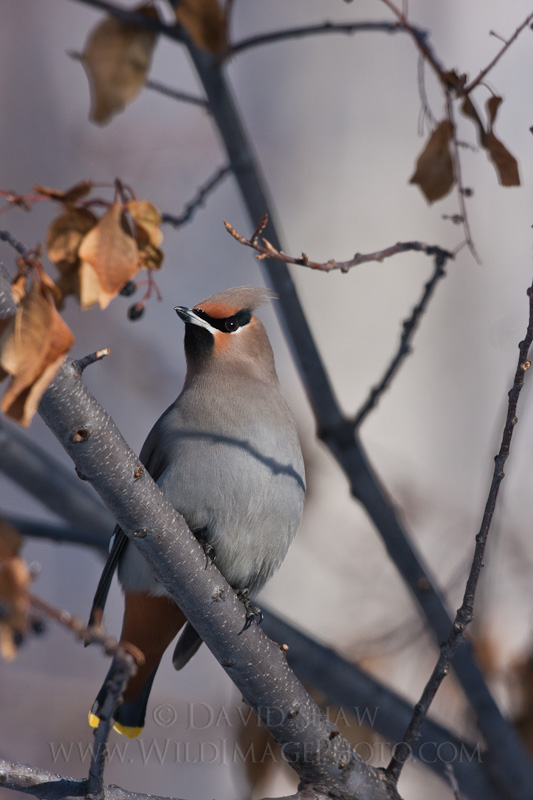
Today (after a request from a friend) I’m going to feature a few images of Bohemian Waxwings. Waxwings in general, and Bohemians in particular are spectacular birds. Their smooth, almost textureless, plumage makes them look like they were, well…. carved out of wax. Unlike their better known southern counterpart, the Cedar Waxwing, Bohemians are dominated by gray, with just a touch of chestnut around the face and under the tail. But it is the flashes of reds and yellows in the wings, that really make these birds pop. In short, they are simply elegant. Fairbanks is lucky to have this species around throughout the year, but is the winter months when they are most easily observed. Voracious fruit-eaters Bohemian Waxwings can almost always be found around Choke-cherry trees where the fruits from the previous summer are still hanging in abundance. One of the best places to find them is in the parking lots on the upper campus at the University of Alaska Fairbanks, however all three of these shots were made in a friend’s backyard.

The top is my favorite of the series and is overall a good image, but has a few flaws. First, I hate that shadow of the branch swiping across the bird’s breast. It is distracting and breaks up the smooth plumage of the bird. As with flaws of this kind, a bit of work in post-processing and I could probably remove that. Also the dry brown leaves are not a problem overall, but I dislike the ones right in front of the bird’s face. Otherwise it is nicely composed, shows some habitat and the gray background goes almost perfectly with the gray bird; an aspect I like very much.

This second image has little action with the bird reaching for a berry. The head is cocked nicely and you can even get a good look at the bird’s lovely red eye, but the image is busy. Too many branches, berries and leaf clusters.

This final image is similar to the one above, and has a lot of the same attributes and faults. Overall, it’s fine, but the shadows across the bird’s feathers are a nuisance and the background has just too much going on. Too many criss-crossing lines and contrasting shapes. Not bad, I’ve kept the shot for reason, but what I wouldn’t give to have any of these birds pose in front of a clean gray background. Next time. Next time.

These images, and other waxwing shots can be found for sale on my stock site as prints or digital downloads here.


Avian Retrospective 8: Sandhill Crane

Image

Today we come back to my retrospective of bird images and feature the Sandhill Crane. Each autumn, Fairbanks is fortunate to host several thousand cranes as they stage for migration. In the last days of August the Creamer’s Field Migratory Waterfowl Refuge is packed with birds, and it is one of my favorite times to be out making photographs. These four images were all made in the same season, but each succeeded or failed for different reasons.

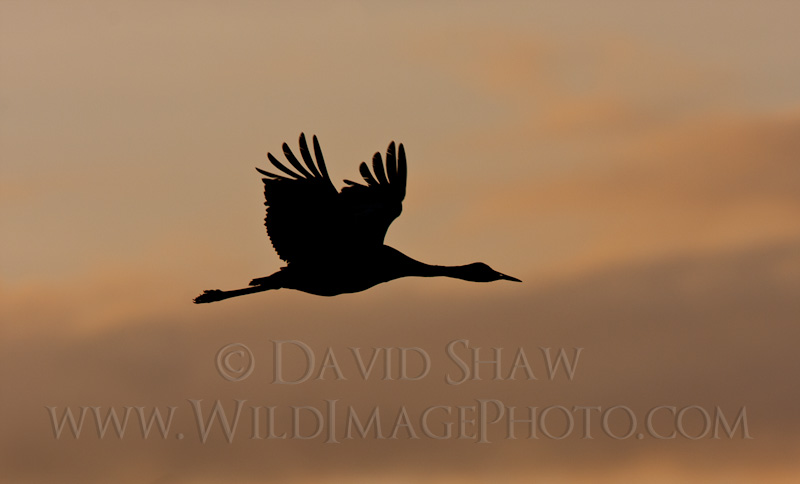
The top image is simple and successful. It is a sunrise shot, the bird is nicely silhouetted and sharp. The profile is so perfect in fact that you can see right through the nostrils on the bird’s bill to the colorful clouds on the other side. I’ve never had that happen before this image, or since (though I’m not sure you can see that in this smaller version). I exposed off the bright clouds and snapped the image. Simple. However, had I metered off the bird itself, it would have been a much slower shutter speed, blurring the crane and blowing out the background resulting in a failed image. I haven’t done much in post-processing except crop the image slightly, and add some contrast. Overall it works out just fine, and I’m pleased with the shot.

This second image was made in the evening and features the very low angle sunlight hitting the underside of the bird. This image too is a basic and straight-forward flight shot. Cranes are great subjects for flight photography because they are big, fly slowly and often close to the ground, allowing much easier focusing and composition. Had the light not been as good, this would have been a mediocre shot at best, one I may not have opted to keep. (See the final image for a lighting comparison.) As it is, the image is nice, I like the bird’s pose and it’s sharp. There is texture in the clouds in the background which provides a bit more interest than a clear, blue sky. In fact, I’ll take clouds over a blue-bird sky any time when it comes to wildlife photography. The verdict? A solid image, well lit.

This next image is mostly successful but for a very different reason. The lighting is not nearly as good as the previous image, rather gray, with a touch of sun on the lower bird. But it is the flocking birds in the background that make the shot work.  This let’s the image tell a story, provides a sense of scale and hint of the abundance found during the fall migration. I don’t like the empty space in the top 1/4 of the frame. It isn’t really enough to provide space for copy, but it is enough to appear empty. I’ve tried cropping the image to eliminate that area, but I haven’t liked the resulting frame shape. I could have greatly improved the image by composing it with the focal crane in the left side of the frame, a bit higher up, which would eliminate much of the empty gray sky, and shown more of the birds flying in the background. The verdict? Good and interesting, but with some major flaws.


This final image I include as an example of one with several flaws. Though the image is generally sharp and the flock of cranes is in a nice formation, it is rather boring image. The background is just empty blue sky. No cloud patterns, no color, just blue. Boring. the birds themselves are flatly lit and lacking interest. Again, boring. This really demonstrates the importance of light in photography. Good quality light can make or break an image, and this one broke.

All of these images and several others of sandhill cranes are available for sale as prints or digital downloads on my stock site. Click here to check them out.